




Esports has become a major part of the gaming industry. Millions of people play competitive video games, watch professional tournaments, and follow their favorite gaming teams online. What once started as small gaming competitions has developed into an international entertainment industry.
But are esports popular hmcdgaming readers should know about? Yes. Competitive gaming attracts audiences through professional tournaments, livestreams, online communities, and popular multiplayer games.
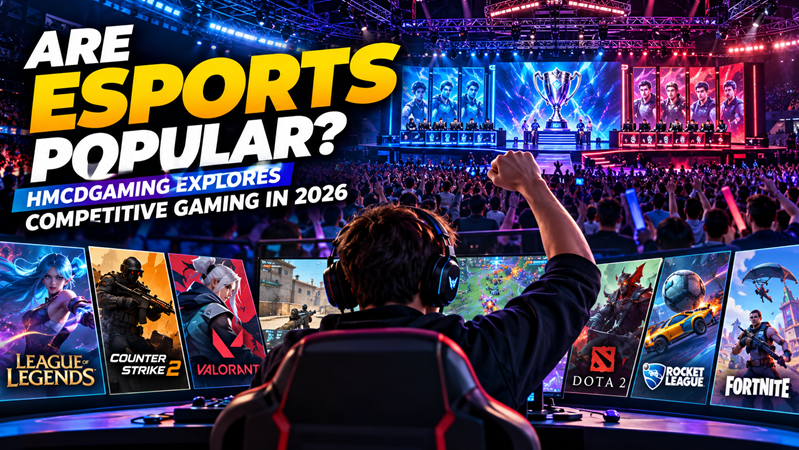
Titles such as League of Legends, Counter-Strike 2, Valorant, and Dota 2 have helped esports reach a wider audience. Mobile games have also expanded competitive gaming, particularly in regions where smartphones are more accessible than gaming computers.
However, esports popularity involves more than watching professional matches. It includes competitive communities, amateur tournaments, college programs, content creation, and career opportunities.
This HMCDGaming guide explores why esports is popular, which games attract competitive players, how tournaments work, and how beginners can participate.
What Is Esports?
Esports, short for electronic sports, refers to organized video game competitions. Players compete individually or in teams under established rules.
Some competitions take place online, while others happen at live events and dedicated gaming arenas. Professional tournaments may offer prize money, rankings, sponsorship opportunities, and championship titles.
Unlike casual gaming, esports emphasizes competitive performance. Players develop game knowledge, communication, reaction time, strategic thinking, and teamwork to improve their results.
How Is Esports Different From Regular Gaming?
Casual gaming usually focuses on entertainment and relaxation. Esports places greater emphasis on competition and measurable improvement.
For example, friends playing Rocket League might enjoy scoring goals together. Professional players practice aerial control, analyze opponents, coordinate passing plays, and review their mistakes.
Both groups enjoy gaming, but their objectives differ.
Esports includes several types of competition:
- Professional tournaments featuring established teams.
- Organized leagues with scheduled matches.
- Amateur competitions for developing players.
- College esports programs and campus gaming clubs.
- Online ranked matches for everyday competitors.
- Livestreams, commentary, and competitive gaming analysis.
This variety allows people to participate according to their interests, experience, and available resources.
Are Esports Popular in the United States?
Yes. Esports has an established audience in the United States, although popularity varies by game, tournament, and platform.
American fans watch professional competitions, follow gaming personalities, attend live events, and participate in online communities. Some follow an entire competitive season, while others watch only major championships.
Several factors explain esports’ popularity.
Online Streaming Makes Esports Accessible
Streaming platforms such as Twitch and YouTube allow fans to watch competitions from home. Viewers can follow live matches, watch highlights, and revisit important moments.
Streaming also helps aspiring players build audiences. They can share gameplay, explain strategies, and connect with other gamers without depending entirely on traditional media.
Competitive Games Build Loyal Communities
Many competitive games encourage players to improve their skills over time. Ranked matches, seasonal updates, and competitive challenges give players reasons to return.
Professional tournaments create additional excitement. Fans support their favorite teams, discuss player transfers, and celebrate championship victories.
Some viewers watch matches for entertainment. Others study professional gameplay to improve their own performance.
Major Tournaments Attract Large Audiences
International championships demonstrate how far esports has reached.
Esports Charts reported that Mobile Legends: Bang Bang reached approximately 5.68 million peak concurrent viewers during the first half of 2026. Other leading competitive games, including Counter-Strike and League of Legends, also attracted substantial audiences.
Peak concurrent viewership measures the highest number of people watching simultaneously. It does not represent the total number of unique viewers throughout an entire tournament.
Even with this distinction, major competitions demonstrate esports’ ability to attract international audiences.
Which Esports Games Are the Most Popular?
Different competitive games appeal to different audiences. Some emphasize tactical precision, while others reward strategy, movement, or individual skill.
1. League of Legends
League of Legends is a multiplayer online battle arena, commonly called a MOBA. Two teams of five players compete to destroy the opposing team’s base.
Players must coordinate attacks, control objectives, and make strategic decisions. The game requires teamwork, character knowledge, and careful resource management.
Its international championship attracts viewers who enjoy high-level strategy and competitive rivalries.
2. Counter-Strike 2
Counter-Strike 2 is a tactical first-person shooter that emphasizes precision, communication, and teamwork.
Players manage in-game resources, coordinate their movements, and make decisions under pressure. Positioning and timing can influence a match just as much as shooting accuracy.
The game’s competitive tournaments attract fans who enjoy tactical gameplay.
3. Valorant
Valorant combines tactical shooting with characters that have unique abilities.
Teams must coordinate attacks, defend important locations, and use their abilities effectively. Successful players combine accurate shooting with strategic thinking.
Its competitive format appeals to fans who enjoy teamwork and fast decision-making.
4. Dota 2
Dota 2 is another major MOBA known for its strategic complexity.
Players select heroes with different abilities and work together to destroy the opposing team’s Ancient. Map control, hero matchups, and resource management influence the outcome.
The International remains one of the best-known events in the game’s competitive scene.
5. Mobile Legends: Bang Bang
Mobile Legends: Bang Bang is a mobile MOBA with a substantial competitive following, particularly in Southeast Asia.
Players compete in five-person teams and coordinate their attacks to destroy the opposing base. Because it runs on mobile devices, the game offers a different entry point into competitive gaming.
Its tournament audiences demonstrate that esports is not limited to PC and console games.
6. Rocket League
Rocket League combines soccer with rocket-powered cars.
The objective is straightforward, but advanced competition requires aerial control, precise movement, passing, and strong positioning.
Its accessible concept and demanding mechanics make it attractive to players and spectators.
Other competitive titles include Call of Duty, Apex Legends, Overwatch 2, Fortnite, and Street Fighter 6.
Why Is Esports Becoming More Popular?
Esports benefits from technological developments, changing entertainment habits, and easier access to competitive gaming.
Better Internet and Streaming Technology
Reliable internet connections allow players to compete with teammates in different locations. Fans can also watch international tournaments without traveling.
Streaming services provide opportunities for emerging competitors to share gameplay, publish tutorials, and develop communities.
Gaming Has Become Mainstream Entertainment
Video games are a regular part of entertainment for many American households. This broad gaming audience creates opportunities for competitive games to attract new players and viewers.
However, playing video games does not automatically mean someone watches esports. Competitive gaming has its own audience and viewing habits.
College Esports Creates New Opportunities
Some colleges offer esports teams, organized training, campus clubs, and scholarships.
These programs can give students opportunities to compete while developing teamwork and communication skills. Availability varies by institution, so prospective students should verify current requirements directly with individual colleges.
Mobile Gaming Expands Access
Mobile esports has helped competitive gaming reach people who do not own gaming PCs or consoles.
Games such as Mobile Legends: Bang Bang and PUBG Mobile support organized competitions across multiple regions.
This accessibility has helped mobile titles establish their own competitive communities and tournament audiences.
Is Esports as Popular as Traditional Sports?
Esports has become a significant entertainment category, but its popularity differs from that of traditional sports.
The NFL, NBA, and major international soccer competitions benefit from long histories, established fan bases, and extensive broadcast networks. Esports has developed through game publishers, online platforms, tournament organizers, and digital communities.
| Feature | Esports | Traditional Sports |
|---|---|---|
| Main activity | Competitive video games | Physical athletic competition |
| Viewing options | Livestreams and live events | Television, streaming, and stadiums |
| Competition format | Online and in-person tournaments | Leagues, matches, and tournaments |
| Key skills | Strategy, reactions, and teamwork | Physical and tactical skills |
| Rules | May change with game updates | Usually more stable |
| Career opportunities | Players, coaches, analysts, and broadcasters | Athletes, coaches, analysts, and broadcasters |
A leading esports tournament can attract millions of viewers. However, that does not mean esports has surpassed every traditional sport.
The fairest comparison considers individual events, audiences, and consistent measurement methods.
Pros and Cons of Are Esports Popular HMCDGaming
Competitive gaming offers entertainment and professional opportunities, but it also has limitations.
Advantages of Esports
- Accessible competition: Many games offer free entry-level play.
- Teamwork: Multiplayer matches encourage communication and coordination.
- Strategic thinking: Players analyze opponents and adapt their plans.
- Community: Gaming groups connect people with shared interests.
- Career opportunities: Experienced participants can explore coaching, broadcasting, and content creation.
- Educational opportunities: Some colleges offer esports programs and scholarships.
These benefits depend on how people participate. Gaming does not automatically improve every skill.
Disadvantages of Esports
- Intense competition: Few players reach the highest professional levels.
- Time demands: Practice can interfere with school, work, and sleep.
- Uncertain earnings: Salaries and prize money vary widely.
- Physical strain: Long sessions can contribute to eye discomfort and poor posture.
- Online toxicity: Some communities experience harassment and cheating.
- Dependence on publishers: Game updates and business decisions can affect competitive scenes.
Players should maintain healthy routines and set realistic goals. Professional gaming is not a guaranteed source of income.
Can You Make Money Through Esports?: Are Esports Popular HMCDGaming
Yes, but earning a reliable living through competitive gaming is difficult.
Professional players may earn money through salaries, tournament prizes, sponsorships, and streaming. Other people work as coaches, analysts, commentators, or content creators.
Common Esports Career Paths
Professional player: Competes for an esports organization or enters tournaments independently.
Streamer or content creator: Publishes gameplay, tutorials, reviews, and entertaining videos.
Coach or analyst: Helps teams improve their strategies and prepare for opponents.
Commentator or event producer: Provides match commentary or helps organize tournaments and broadcasts.
Each career requires different skills. Someone who enjoys analyzing matches or producing videos may find opportunities outside professional competition.
Is Professional Gaming a Realistic Career?
It can be, but aspiring professionals should approach it carefully.
Develop measurable skills, participate in legitimate competitions, and review your performance regularly. Continue your education or maintain another income source while exploring opportunities.
Before joining a team, examine contracts and verify payment terms. Be cautious of organizations promising guaranteed earnings in exchange for suspicious upfront fees.
Expert Tips for Getting Started With Esports: Are Esports Popular HMCDGaming
HMCDGaming readers interested in competitive gaming can follow these practical steps.
1. Choose One Main Game
Start with a game that matches your interests and available hardware.
Learn its objectives, controls, maps, characters, and ranking system. Focus on building a strong foundation before moving between several competitive titles.
2. Create a Practice Routine
You do not need to play for eight hours every day to improve.
A beginner could try this 70-minute routine:
- 10 minutes of warm-up exercises.
- 20 minutes practicing a specific skill.
- 30 minutes playing focused matches.
- 10 minutes reviewing mistakes.
Adjust the routine to fit your schedule. Focused practice is more useful than playing for hours without a clear objective.
3. Learn From Professional Players
Watch professional matches and study the decisions behind important moments.
Pay attention to positioning, teamwork, timing, and strategy. Then apply one useful lesson during your next practice session.
4. Join a Positive Gaming Community
Look for beginner tournaments, moderated gaming communities, local clubs, or college programs.
Supportive communities can help you find teammates and receive constructive feedback. Avoid groups that encourage cheating, harassment, or unnecessary spending.
5. Maintain Healthy Gaming Habits
Take regular breaks, maintain comfortable posture, and protect your sleep schedule.
Pay attention to fatigue, eye discomfort, and wrist pain. Adjust your setup and habits when necessary.
(FAQs) About Are Esports Popular HMCDGaming
1. Are esports popular in 2026?
Yes. Esports has established professional leagues, international tournaments, and large online audiences. Popularity varies by game and region, while mobile esports continues to attract significant attention.
2. Why are esports so popular?
Esports combines competition, entertainment, social interaction, and opportunities to improve gaming skills. Streaming makes tournaments accessible, while professional rivalries encourage fans to follow their favorite teams.
3. What is the most popular esports game?
The answer depends on the measurement and period. Mobile Legends: Bang Bang, League of Legends, and Counter-Strike have all attracted substantial competitive audiences. Rankings change according to tournament schedules and viewership metrics.
4. Are esports popular in the United States?
Yes. American fans follow competitive games through livestreams, tournaments, local events, and college programs. Audience sizes vary significantly between titles.
5. Can beginners participate in esports?
Absolutely. Beginners can start with ranked matches, amateur tournaments, and community competitions. Consistent practice and knowledge of the game’s rules help players improve.
6. Can you earn money playing esports?
Some competitors earn salaries, prize money, sponsorship income, or streaming revenue. However, professional opportunities are competitive, and earnings are not guaranteed.
7. Do colleges offer esports scholarships?
Some colleges offer esports scholarships or other financial support. Availability depends on the institution, program, and eligibility requirements.
8. Is esports a real sport?
Esports is organized competitive gaming. Its classification as a sport varies by organization, but professional competition requires preparation, teamwork, strategy, and consistent performance.
9. Is esports suitable for children and teenagers?
It can provide social and competitive opportunities when managed responsibly. Parents should consider age ratings, online safety, screen time, sleep, and school responsibilities.
10. How can I follow esports news through HMCDGaming?
Read gaming guides, tournament coverage, player profiles, and competitive analysis. Verify important information through official tournament organizers, game publishers, and established esports statistics providers.
Conclusion: Are Esports Popular HMCDGaming
Esports has become an established part of competitive gaming and online entertainment. Professional teams, international tournaments, and dedicated communities demonstrate its reach.
Its popularity comes from several factors, including accessible streaming, engaging competitive games, international tournaments, and opportunities to participate at different skill levels.
However, not every game attracts the same audience, and professional gaming does not guarantee financial success.
For HMCDGaming readers, exploring competitive titles, learning from reliable sources, and following verified tournament developments provides a practical way to understand the industry.